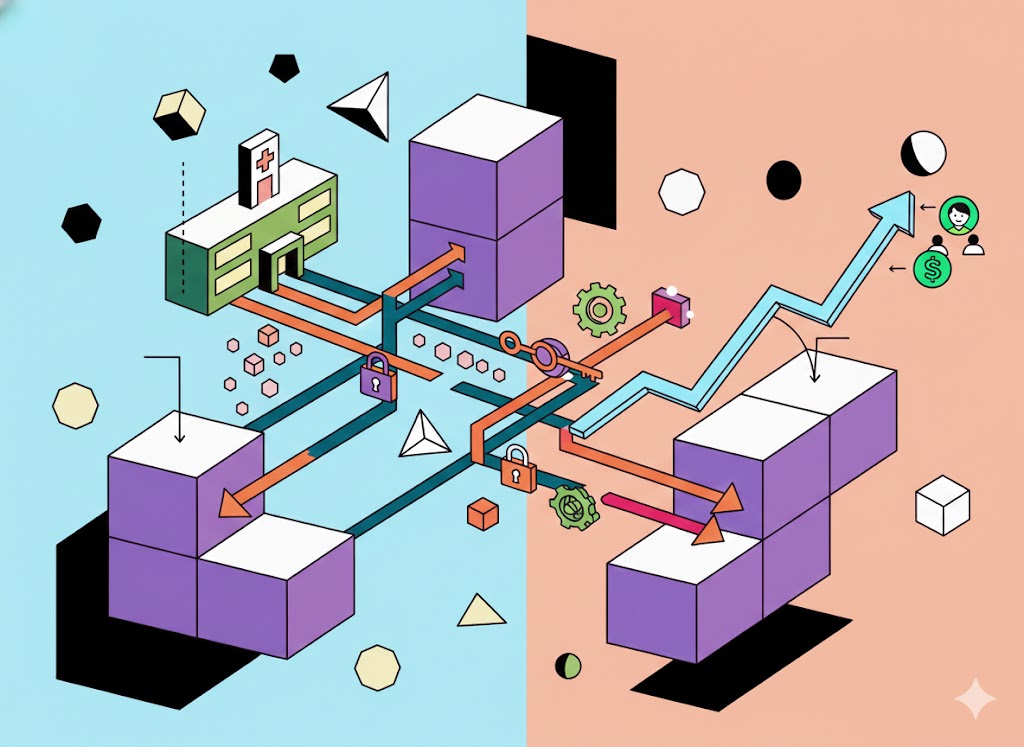
The healthcare system is undergoing a major transformation. According to McKinsey & Company, nearly 90 million lives will be under value-based care models by 2027—more than double from 43 million in 2022. This shift isn’t just about new payment structures. It’s fundamentally changing how care is delivered, measured, and optimized.
Today’s healthcare ecosystem includes physicians, patients, technology platforms, labs, pharmacies, pharmaceutical companies, and payers— all generating critical data. The challenge is ensuring these systems communicate effectively.
That’s where interoperability becomes essential. When electronic health records connect with insurance platforms, lab systems integrate with pharmacy data, and specialist notes reach primary care providers in real-time, clinicians gain a complete patient picture—leading to better decisions and stronger outcomes.
Key Takeaways
- Value-based care will impact 90 million Americans by 2027
- Effective data sharing is essential across providers, payers, and technology platforms
- Interoperability creates a complete longitudinal patient view
- Connected systems improve both clinical outcomes and financial performance
- Integrated care reduces duplicate testing and information gaps
Value-Based Care: A New Paradigm for Healthcare Delivery
Healthcare is moving away from traditional fee-for-service models toward value-based care where providers are rewarded for keeping patients healthy rather than performing more procedures.
What Is Value-Based Care?
Value-based care focuses on long-term patient outcomes by emphasizing preventive care, early intervention, coordinated treatment, and cost efficiency. Instead of reacting to illness, providers proactively manage patient wellness over time.
Major Value-Based Care Programs in the U.S.
Common models include:
- Accountable Care Organizations (ACOs)
- Medicare Advantage plans
- Bundled payment programs
Each model encourages collaboration, reduced redundancy, and higher quality care.
Understanding Healthcare Interoperability
Interoperability allows healthcare systems to exchange and interpret patient data seamlessly—essentially giving different platforms a shared digital language. It ensures data is accurate, structured, meaningful, and usable in real time.
What Interoperability Really Means
Interoperability isn’t just about sending data. It ensures receiving systems can understand and use information correctly to support clinical decisions—whether that’s a specialist reviewing lab results or a pharmacy validating medication history.
Levels of Interoperability (HIMSS Framework)
- Foundational — basic data exchange between systems
- Structural — standardized formats and data structure (e.g., HL7 messages)
- Semantic — systems interpret meaning (e.g., medication codes)
- Organizational — governance, policy, and workflow alignment
Modern Interoperability Standards
- FHIR (Fast Healthcare Interoperability Resources) by HL7 International
- SNOMED CT for standardized clinical terminology
- USCDI baseline data requirements for U.S. health systems
- TEFCA framework for nationwide exchange rules
Why Interoperability Is Essential for Value-Based Care
Value-based care depends on complete, real-time data. When EHRs, labs, pharmacies, and care management systems work together, providers can:
- Identify high-risk patients earlier
- Close care gaps automatically
- Coordinate treatment across specialties
- Track outcomes accurately over time
How Connected Systems Improve Care Coordination
| Care Setting | Shared Data | Patient Impact |
|---|---|---|
| Primary Care | Medications, vitals, diagnoses | Baseline health visibility |
| Emergency Room | Allergies, recent tests | Prevents duplicate testing and medication errors |
| Specialty Clinics | Referrals, treatment plans | Continuity of care for specialized treatments |
| Pharmacy | Prescription history, interactions | Reduces adverse drug events |
Common Barriers to Interoperability
Despite its importance, healthcare organizations often face obstacles that delay or limit interoperability success.
Technical Barriers
- Legacy systems and proprietary data formats
- Disconnected departmental tools and data silos
- Limited API support or inconsistent data mapping
Organizational Barriers
- Resistance to workflow change
- Competing priorities across departments
- Concerns around privacy, security, and compliance
Financial Barriers
- Software licensing and implementation costs
- Infrastructure upgrades
- Staff training and process redesign
- Ongoing maintenance and support
Driving Better Outcomes Through Connected Care
Organizations that invest in interoperability consistently see fewer medical errors, faster care transitions, improved patient satisfaction, and stronger financial performance. Effective strategies include standardized data templates, real-time clinical alerts, payer integration, and continuous staff training.
The Future of Value-Based Healthcare Is Connected
Healthcare is entering a new era—one where outcomes, efficiency, and patient experience define success. Organizations that break down data silos and invest in interoperable systems will lead this transformation.
Interoperability is no longer optional. It’s the foundation of modern, value-based healthcare.
FAQ
What is the relationship between healthcare interoperability and value-based care models?
Interoperability supports value-based care by enabling seamless data sharing across care teams and systems. That shared data helps providers coordinate treatment, track outcomes, and reduce unnecessary costs—core requirements in value-based models.
How does data integration improve care coordination?
Data integration provides a complete view of the patient across settings. With real-time access to records, teams can prevent duplicate testing, close care gaps, and personalize care plans based on the latest information.
What are the biggest barriers to interoperability?
Common barriers include legacy technology, data silos, workflow resistance, compliance concerns, and the cost of implementation and ongoing support—especially for smaller practices.
How do standards like FHIR and TEFCA support value-based care?
Standards like FHIR make data exchange faster and more flexible, while TEFCA establishes national rules for trusted sharing. Together, they help ensure healthcare data remains structured, meaningful, and usable across platforms.